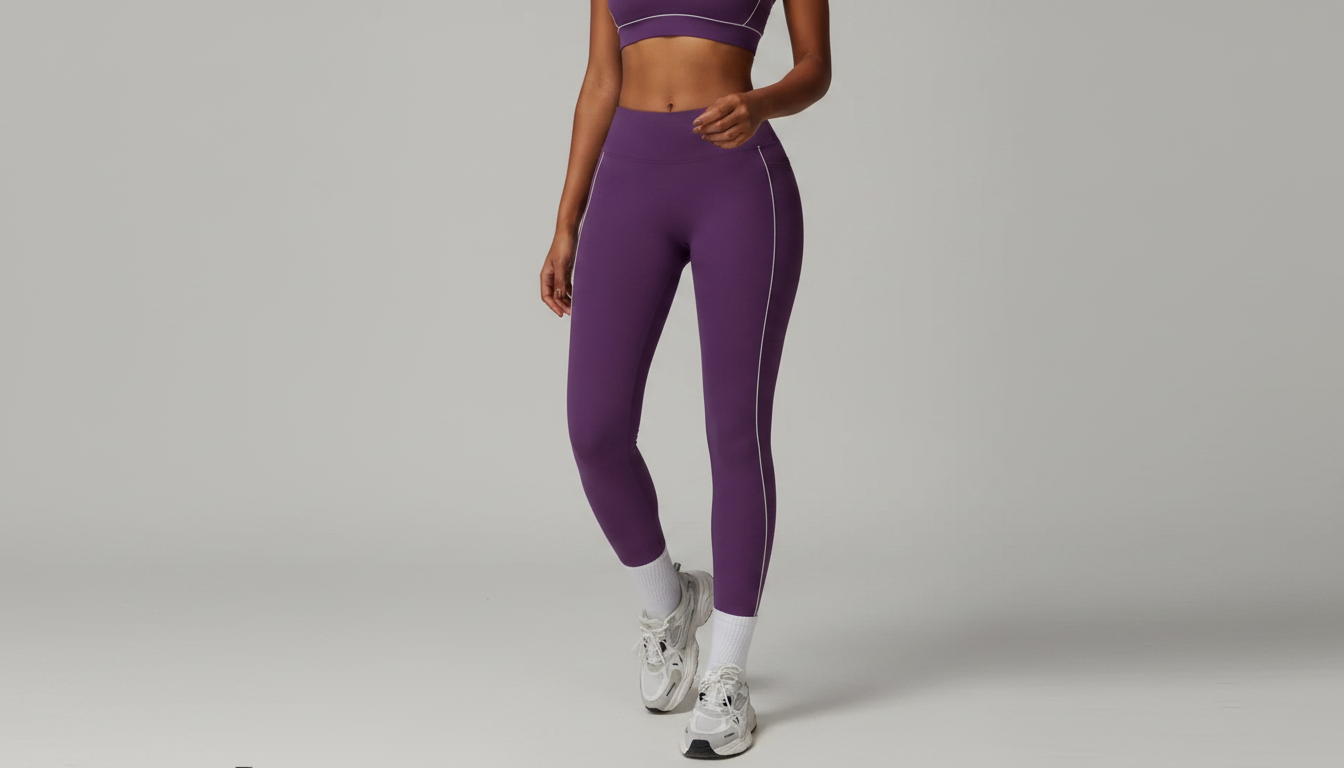
High-waisted leggings can be the difference between a confident flow and constant adjusting. The best tummy-control yoga leggings feel secure at the waist, stay opaque when you move, and keep a smooth, comfortable hand-feel from warm-up through savasana. Below is a practical guide to what matters most—fit, fabric, coverage, and comfort—plus simple care habits that help your leggings hold their shape and softness over time.
A true “stay-put” pair is engineered to support without distracting you. Look for a combination of structure at the waistband and fabric that stretches easily but snaps back after movement.
If you want a simple starting point for everyday yoga, consider Women’s High-Waisted Tummy Control Yoga Leggings for a high-rise feel designed to stay anchored through transitions.
Before committing to a pair, do a quick “real life” fit check—similar to how you’d test running shoes with a short walk.
For higher-sweat days or cross-training, pairing leggings with a supportive top helps everything feel more stable. A streamlined option to match is the Backless Push Up Sports Bra.
Fabric is where “smooth” meets “functional.” The right knit should glide on, stay breathable, and keep coverage when it’s under tension.
| Fabric feel | What it’s like | Best for | Watch for |
|---|---|---|---|
| Buttery/soft brushed | Smooth, cozy, low-friction | Yoga, lounging, travel | Can pill faster with high friction |
| Sleek/compressive | Holds shape firmly, more “snug” | Training, running, higher impact | May feel warm or restrictive for deep stretches |
| Lightweight breathable knit | Airier, flexible, dries faster | Hot yoga, summer wear | May require extra opacity checks |
Materials vary, but many performance leggings rely on elastane (spandex) for stretch and snap-back. For a helpful overview of spandex as a fiber, see Britannica’s spandex reference.
Tummy control works best when it’s working with your body, not against it. Too-small leggings often create the very problems you’re trying to avoid: rolling waistbands, discomfort, and sheerness.
High-waisted leggings are a closet workhorse because the silhouette transitions easily from practice to errands.
For warmer days when you still want a held-in waistband, swap leggings for High Waist Women’s Impact Workout Shorts and keep the same streamlined look.
When in doubt, follow the garment’s care label. The FTC provides practical guidance on apparel labeling and care instructions here: Consumer guidance on clothing and textiles.
Tummy-control leggings are designed to smooth and support with compression, not permanently change body shape. The effect depends on waistband height, compression level, and wearing the correct size so the fabric can distribute support evenly.
Squat-proof coverage comes from knit density, color, and proper sizing, not stiffness. Check opacity in bright light with a mirror and a deep squat; sizing down too much can over-stretch the fabric and make it look sheer.
Rolling often happens when sizing is too small, the waistband is too short, the fabric lacks recovery, or seam placement encourages folding. Choosing the right size and a taller, more supportive waistband usually improves stay-put performance.









Leave a comment